Social proof on a website answers a specific fear
Write down the three reasons someone does not buy from you. Then find the proof for each. That exercise takes twenty minutes and reorganises most websites. If you cannot name three, the exits are worth measuring first.
“Will it arrive when you say?” is answered by an on-time figure, not by a five-star quote. “Have you done this at my size?” is answered by a number of units, not by an adjective. “Will I regret this?” is answered by a guarantee or a reversal, not by a wall of logos.
Generic praise (great to work with, highly professional, exceeded expectations) answers no fear at all. It is pleasant, it is true, and it converts nothing, because it is what an unsatisfied client would also have said politely.
A price is proof of a kind, too. Publishing a range answers “can I afford this?” before the visitor has to ask a human, which is why our own bands are on the site rather than behind a call.
The pattern to look for: proof that could only be written about you. Anything that could be pasted onto a competitor's site is decoration, and it is the same rule that separates a trust signal from a slogan.
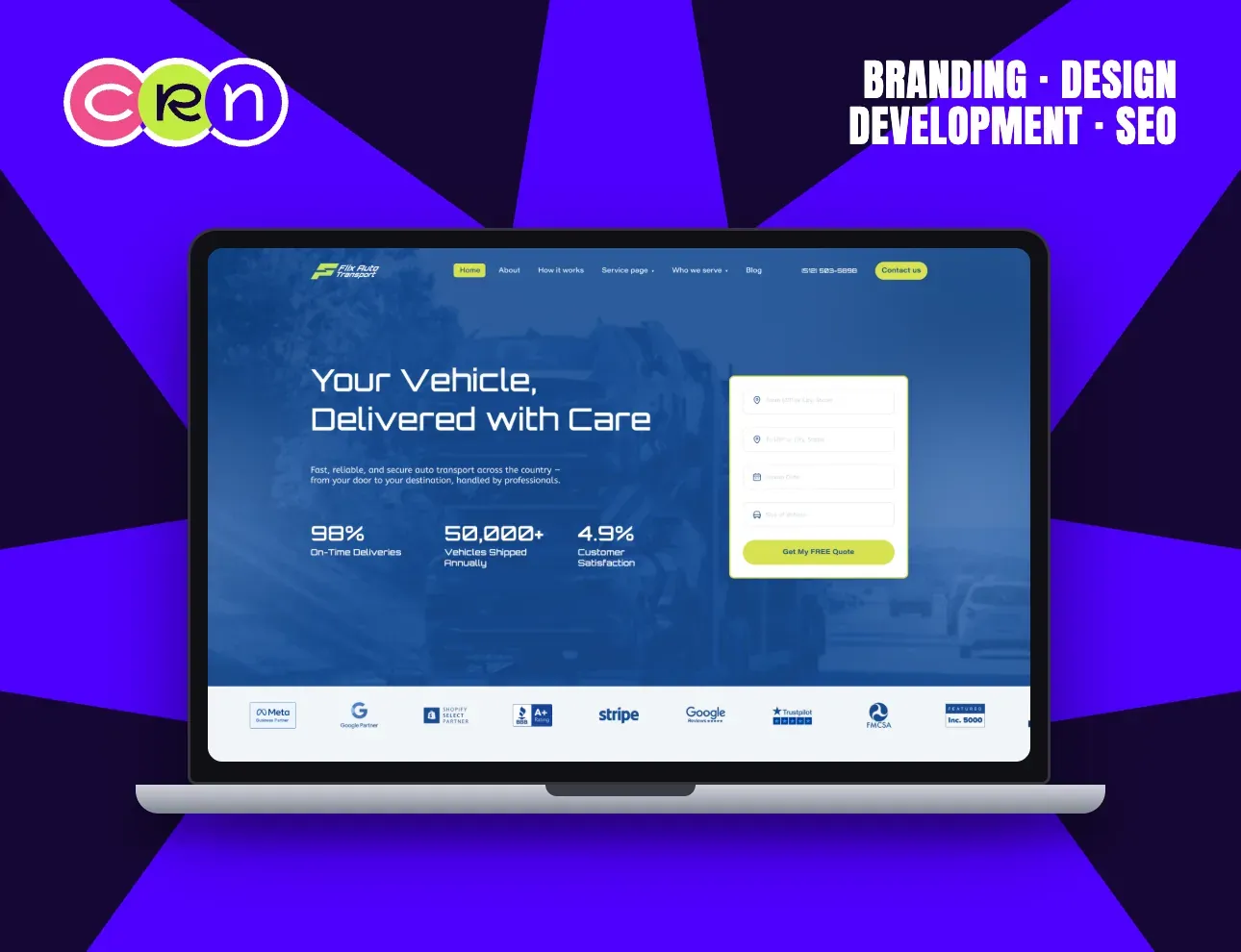
Put it beside the ask
Flix Auto Transport ships cars across the country, and nobody browses a car-shipping site, they want a price. So the quote form is the hero, four fields deep, and the visitor can be mid-quote within seconds of arriving.
The proof sits directly beside it: 98% on-time deliveries, 50,000+ vehicles shipped annually, 4.9 customer satisfaction. Large enough to read at a glance, positioned where the hesitation actually happens, at the submit button, not on an About page nobody opens.
A partner strip runs immediately under the fold, so the reassurance keeps going while the form stays in view. The rule is simple: proof belongs beside the ask, never in a section named after itself.
What not to publish
Numbers you cannot show your working for. A statistic with no source reads as invented, and a reader who doubts one number quietly discounts every other number on the page, including the true ones.
Logos of companies you did one small job for four years ago. If a visitor asks what you did for them and the honest answer is embarrassing, the logo is a liability.
Round numbers. “Over 500 clients” reads as marketing; an odd, specific figure reads as something that was actually counted.
Reviews with no attribution, unless you say plainly what they are. We hold ourselves to this: the client reviews on this site carry the client's brand rather than a person's name, because the platform they came from does not publish client names. Saying that is better than inventing one.
Questions we get asked
What counts as social proof on a website?
Anything a stranger said or did that your visitor can verify: named reviews, client logos you can explain, case studies with scope and dates, counts of something real. The test is not the format, it is whether the thing could have been written about anyone else.
How many testimonials should a page have?
One per objection, placed where that objection arrives. Three specific quotes beside the three moments a visitor hesitates beats a page of twenty, because twenty is a wall and nobody reads a wall.
Do trust badges and award logos help?
Only when the visitor recognises them or you say what they mean. An unexplained badge is visual noise; a recognised certification answers a real question. If you have to explain it in a footnote, spend that space on the explanation instead.