What AI genuinely does well
**A first version, fast.** Describe a page and the current models — Claude, the newest GPT — will return a complete, responsive, reasonably well-structured layout. Five years ago that was a week of someone's life. Now it is a coffee break, and pretending otherwise is just posturing.
**The boring parts, correctly.** Form validation, a responsive table, an accessible dropdown, a date picker that does not fall apart on a phone. These are solved problems, the model has read every solution, and it will not get bored on the fourth one the way a human does at 6pm.
**Explaining code somebody else wrote.** Inheriting a site used to mean a week of archaeology. Now you paste a file and ask what it does. For taking over a site from another team this is the single biggest change in a decade.
**Options.** Ask for six hero treatments and you get six, instantly, without anyone becoming attached to the first one. Used properly this makes the design conversation faster and less political.
Where it stops
**It does not know what your business sells.** A model writes what a page of this type usually says. It cannot know that half your revenue comes from one service you barely mention, or that the phrase your customers actually use is not the one on the page. That gap is where the difference between a pretty site and a selling site lives, and no prompt closes it.
**It builds what you asked for, not what you needed.** Ask for a contact form and you get a contact form. Nobody asks whether the form should exist, whether it should be three fields instead of nine, or whether the phone number should be the primary action because this audience calls rather than browses.
**It has no memory of your constraints.** The CMS your editor can actually use, the redirect map from the old URLs, the legal text that must appear on every page, the analytics that has to survive the move. These are not code problems; they are project problems, and a model has never met your project.
**It is confidently wrong at exactly the wrong scale.** A small error in a component becomes fifty broken pages, and the model will not notice, because from inside the file everything looks consistent. Consistency is not correctness.
The ninety-percent illusion
Every AI-built site we have been sent is around ninety percent finished. It renders, it scrolls, the sections are in a sensible order. The owner reasonably concludes that a little polish is left.
The remaining ten percent is: performance on a real phone on a real network, the speed work nobody sees, semantic structure search engines can read, forms that deliver to an inbox a human checks, an editor who can change a headline without a developer, and a design that does not read as generic.
That ten percent is most of the work. It is also the whole of the value, because it is the part that decides whether the site earns anything. The demo was never the hard bit.
A site that could not have been prompted
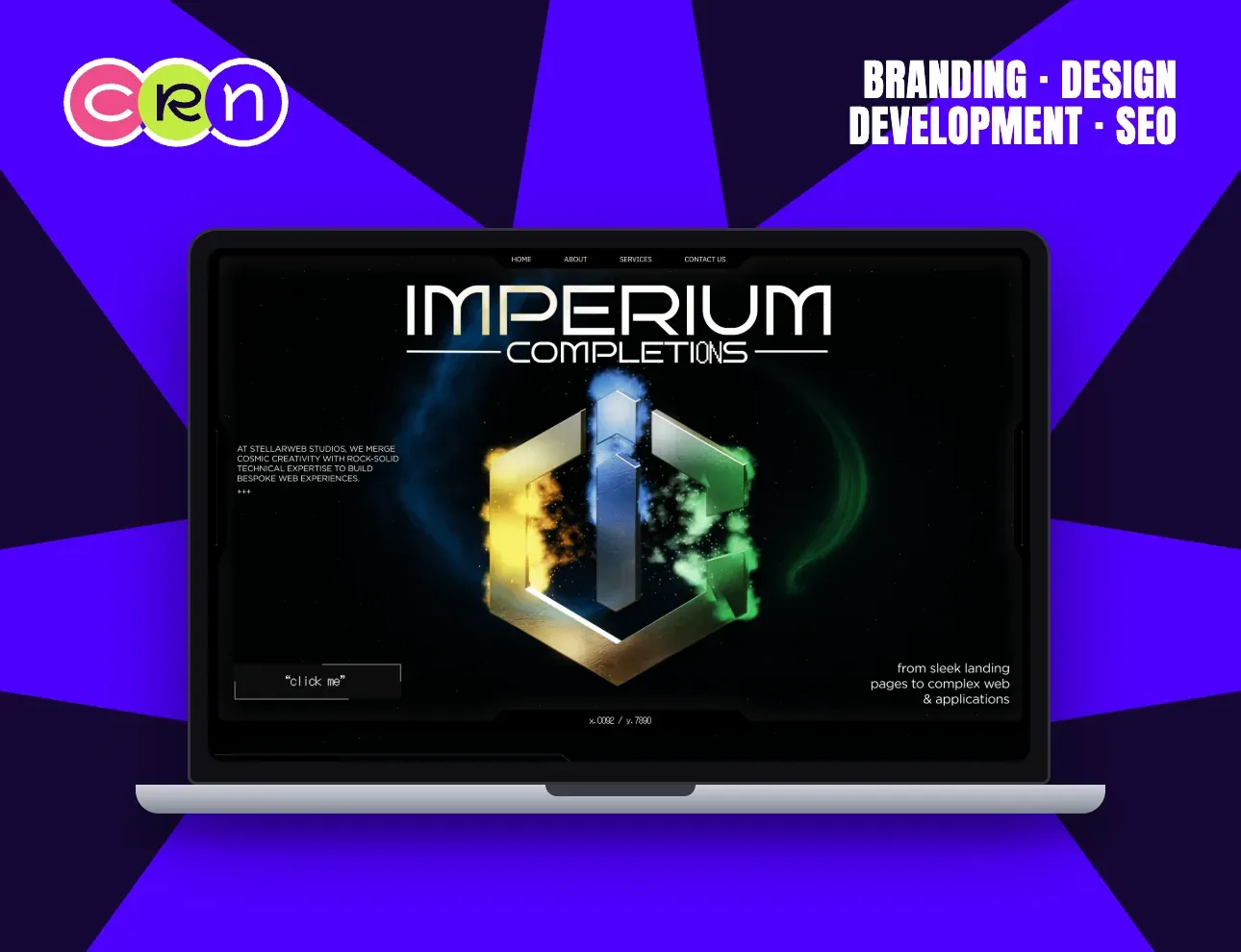
Imperium Completions sells web experiences. The homepage is a 3D object, modelled and lit in-house, with a preloader and a scroll built as one timeline.
A model can write the WebGL. It cannot decide that the object should be the entire argument, that the preloader earns its seconds, or that zero stock images is a positioning statement. Those calls came from people who had to defend them to a client.
This is the shape of the whole answer. The typing is cheap now. The judgement about what to type was always the product.
Questions we get asked
Can AI build a complete website on its own?
It can build a working one. It cannot decide what the site should say, which audience wins when two disagree, or what happens to your existing URLs and rankings. Those decisions are the reason sites earn money, and they are made before anyone writes code.
Is an AI-built website good enough for a small business?
As a starting point, often yes. As the thing your revenue depends on, only after someone has checked performance, structure, forms, analytics and editability. The build is the cheap part now; the review is what you are paying for.
Will AI replace web designers and developers?
It has already replaced a large part of the typing. It has not replaced the judgement, and the gap between the two has widened rather than closed. A specialist with these tools now does in a week what used to take a month, which is a very different sentence from being replaced.
What does an AI-built website usually get wrong?
Weight and speed on real phones, heading structure, images shipped at full size, forms that submit nowhere, no redirect plan, and copy that describes the category rather than the company. All of it is fixable, and all of it is invisible until traffic arrives.