Website copywriting for conversion comes first
If a visitor cannot say what you sell after reading the hero, no amount of spacing, type or photography rescues it. Design amplifies a message; it does not supply one, and amplifying nothing gives you a louder nothing.
There is a reliable tell. In a design review, listen to whether anyone quotes the headline. If the whole conversation is about the image, the crop and the colour, the words are not doing any work and nobody has noticed.
The second tell is placeholder text surviving into the second round. Real copy (at real length, with the awkward long product name and the six-word legal caveat) is a design constraint. Fake copy hides every problem until the build.
This is not an argument that words matter more than design. It is that design is a set of decisions about a message, and decisions made before the message exists get made twice.
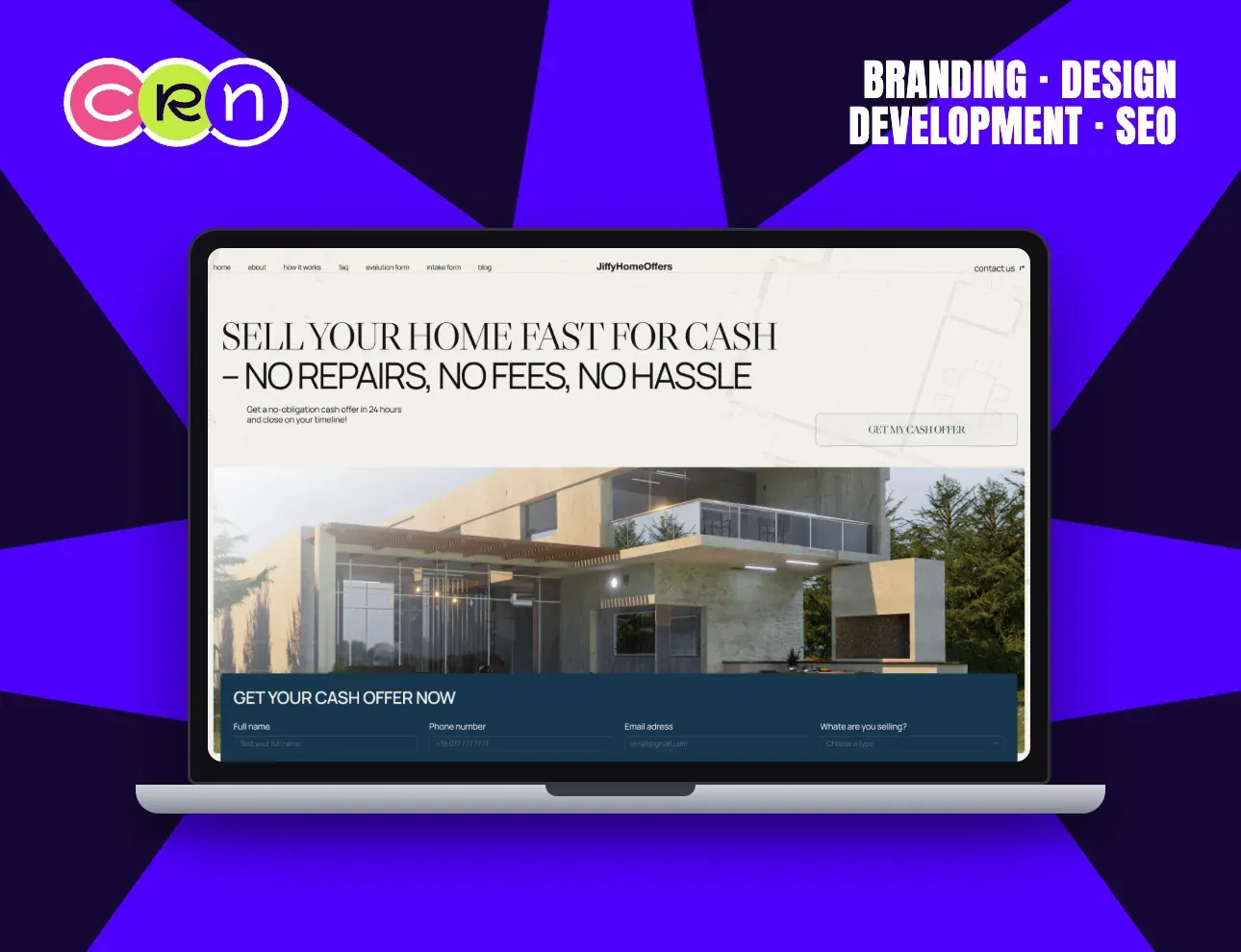
Objections belong in the headline
Jiffy Home Offers buys houses for cash. Its visitors are usually solving a problem (a move, a probate, a repair bill they cannot cover) and they are scanning hard for signs they have landed on a lead machine.
The headline is “Sell your home fast for cash, no repairs, no fees, no hassle”. Three objections cleared in the same breath as the offer, before the visitor has to go looking for any of them. The terms are restated directly underneath: a no-obligation offer in 24 hours, closing on your timeline.
The serif setting does real work too, it reads as a property brand rather than a funnel, which is exactly the distinction this seller is watching for. But the typeface only gets to do that job because the sentence had already done its own.
The sequence
Message first: who this is for, what it is, why now, and the one action. Those are the same four answers a usable brief carries, which is not a coincidence. Structure second: what has to be answered, in what order, for that action to feel obvious. Screens third, and only third.
Two rounds of copy before one round of design is the cheapest configuration available, because copy is the only stage where changing your mind costs minutes.
You can rewrite a headline in ten minutes. Redrawing the page it broke takes a week. That asymmetry is the entire argument, and it survives every attempt to run the stages in the other order.
Questions we get asked
Should copy be written before the design?
The message should be, always. Not every final word, but who the page is for, what it offers, and the one action. Design is a set of decisions about a message, and decisions made before the message exists get made twice.
How long should website copy be?
As long as the argument takes and no longer. Short is not a virtue; unclear is the only real fault. A page that needs four hundred words to answer a genuine objection beats a page of forty that leaves it standing.
Can I use placeholder text during design?
For one round, at real length. Past that it hides every problem until the build: the awkward long product name, the six-word legal caveat, the heading that only fits in the mockup. Real copy is a design constraint, not a content task queued behind it.