Hiring a Webflow developer: five things to ask
Live URLs, not screenshots. A picture proves someone can design. An address proves the thing shipped, loads today, and survived contact with a real client and real content. Ask for the address bar, then open three of them on your phone.
The parts the client can edit without the developer. Ask directly: what could this client change themselves? If the answer is “the blog”, everything else is a maintenance dependency you did not agree to buy. A site built on collections hands you the keys; a site built as static pages hands you a retainer.
A page they did not design. Building someone else's design is a different skill from building your own, because you cannot quietly simplify the bits that are awkward. If every item in the portfolio is theirs end to end, you do not yet know how they handle a file they did not draw.
Edit access from day one, not at handover. Watching the site get built is the cheapest quality control there is, and a developer who is comfortable with that is telling you something.
What happens after launch. Who fixes a broken form in month two, at what rate, and how fast. This is the question that gets skipped in the excitement of starting and remembered in the panic of a Friday.
What “custom” should mean
Custom is not a visual claim. Every agency says custom and means “we did not buy a template”. The useful meaning is narrower: what happens when your business needs something the platform does not do by default?
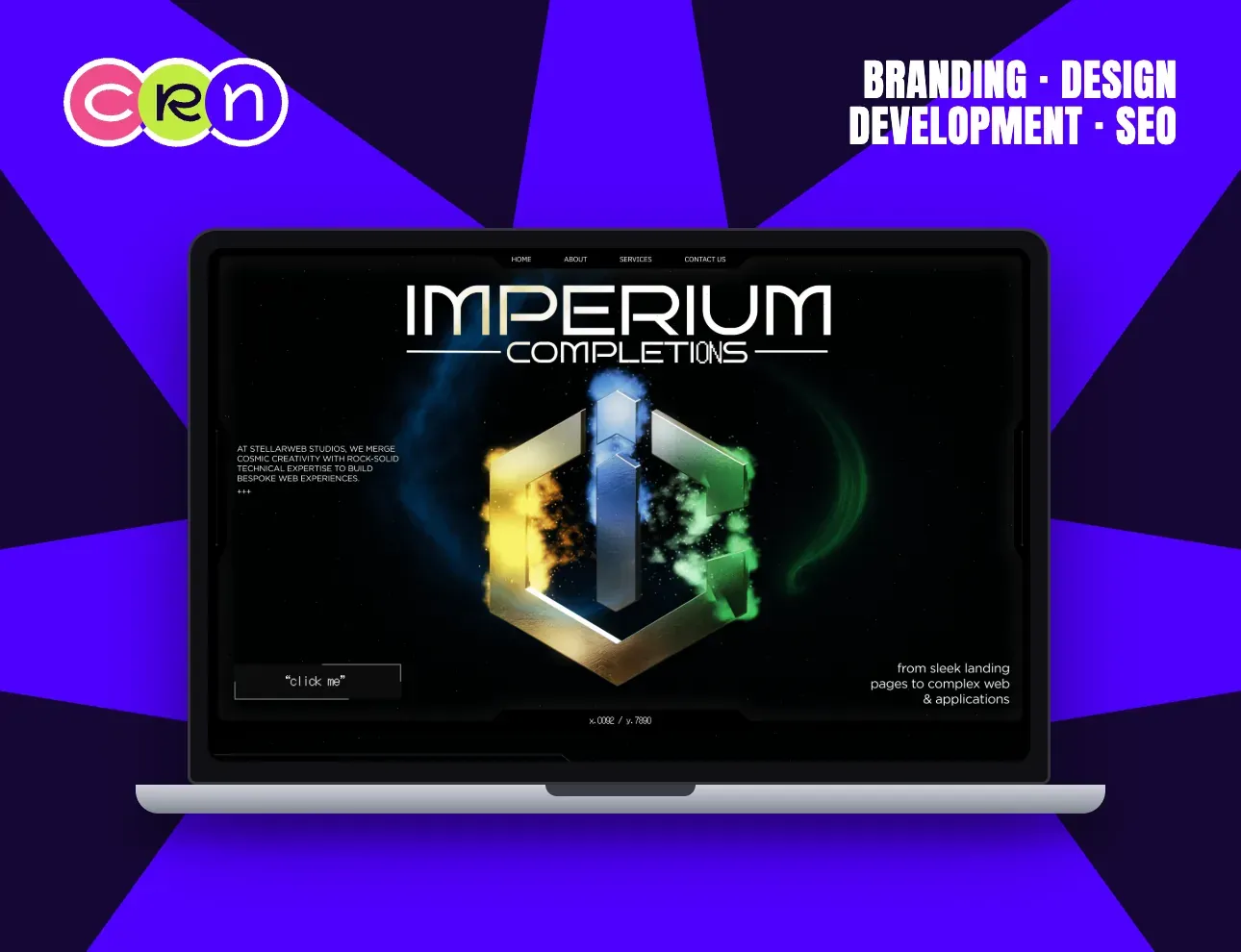
Imperium Completions is a studio selling bespoke web work, so its own site had to carry a hero that no template ships, a 3D object lit and rendered for the web, weighed for page weight before it was made pretty. That is the test: not whether the layout is unique, but whether the awkward requirement got built or got talked out of the brief.
The red flags
No live links. There is always a reason: NDA, client took it down, still in staging. One is plausible. All nine is a pattern.
A price before a scope. A number produced without asking what the site has to do is a number that will change, and the change will not be downward. The honest version of that conversation starts from what actually moves a quote.
No named process and no dates. “A few weeks” is not a timeline. Ask what happens in week one and what they need from you to keep it.
“We will sort the CMS out later.” Content structure is the one decision that is expensive to reverse. Later means never, or means twice.
“Webflow can do anything.” It cannot, and anyone who has shipped enough sites knows exactly where the ceilings are. Someone who has never met one has either been lucky or has not been building long, and the same goes for anyone who cannot tell you when WordPress is the better buy.
Freelancer, agency, or in-house
Three ways to buy the same skill, and they fail differently, which is the part worth knowing before you choose.
A freelancer is the cheapest and the most direct. You talk to the person doing the work, decisions take minutes, and the good ones are very good. The risk is not quality, it is availability: one person has one calendar, and a freelancer who takes a full-time contract in your week two is not being unprofessional, they are being a freelancer. Ask what happens if they are ill in launch week, and accept that the answer may simply be that it slips.
An agency costs more and buys continuity. Someone answers when one person is away, design and build sit under the same roof, and there is a process that does not live in one head. The risk is the opposite one: the person who sold you the project is not always the person doing it, and a small project can end up with the newest person on the team. Ask who will actually build it, by name, and ask to see their work rather than the agency's.
In-house makes sense once the site is genuinely part of how the business runs — weekly changes, campaigns, a content calendar with someone's name on it. Below that volume, a full-time hire spends most of the year waiting for work, which is expensive in a way that never appears on an invoice.
A useful test that cuts across all three: ask who owns the Webflow project after launch, and how you would move it if you stopped working together. If the answer is complicated, you are not buying a website, you are renting access to one.
What it costs, and how it gets billed
Rates vary by geography more than by skill, and the spread is wide enough that a number without a location attached tells you almost nothing.
The shape matters more than the rate. Fixed price for a defined scope, an hourly or day rate for work that genuinely cannot be scoped yet, and a retainer for after launch. Anyone offering a fixed price without asking what the site has to do is guessing, and anyone insisting on hourly for a five-page marketing site is asking you to carry a risk they are better placed to price.
Ask what a change costs before you need one. Not to negotiate it, to find out whether it has been thought about. “We would look at it” is a different answer from “small changes are covered, anything over an hour is quoted first”, and only one of those is a working relationship in month three.
And ask for a payment schedule tied to stages rather than dates. Deposit, design sign-off, launch. It aligns both sides on the same milestones, and it makes a stalled project visible to everyone at the same time instead of only to the person who stopped invoicing.
Questions we get asked
How much does it cost to hire a Webflow developer?
Rates vary by geography far more than by skill, and a project number is more useful than an hourly one. A defined five-page marketing site from an existing design typically lands between $3,000 and $7,000. Be more suspicious of a price quoted before anyone asked what the site has to do than of any particular number.
What should I ask a Webflow developer before hiring them?
Five things: live URLs rather than screenshots, what the client can edit without them, one page they did not design themselves, edit access from day one rather than at handover, and what happens after launch — who fixes a broken form in month two, at what rate, and how fast.
Freelancer or agency for a Webflow project?
A freelancer is cheaper and more direct, and carries one calendar's worth of risk. An agency costs more and buys continuity, and carries the risk that the person who sold the project is not the person building it. Ask an agency who will actually build it, by name, and ask to see that person's work.
What are the red flags when hiring a Webflow developer?
No live links across a whole portfolio, a price given before a scope, no named process and no dates, and “we will sort the CMS out later”. That last one is the most expensive, because content structure is the single decision that cannot be reversed cheaply.