Webflow SEO: the panel, done properly
Title and description per page, written for the query rather than for the brand. A title that opens with your company name spends its most valuable characters on the one word the searcher did not type.
Slugs that are readable and permanent. A slug with a year in it is a promise to either break the URL or look stale, and there is no third option.
Canonicals, set deliberately. This is where most Webflow sites lose: the project stays reachable at its `.webflow.io` staging address while the real domain goes live, and the two compete for the same content. Ten minutes to fix, months to notice.
The sitemap, actually read. Auto-generate is fine, but open it once and confirm it lists the pages you meant and not the utility pages you forgot to exclude. A collection template mints one URL per item, so deciding what becomes a collection is also deciding what gets indexed.
The noindex toggle on staging, on before anyone shares a preview link.
What actually moves it
One page per intent. Two pages chasing the same query split their own signals and neither wins; one page answering it properly beats both.
Real copy, unique per page. Templated pages that differ only in a heading are the single fastest way to get a site classified as thin, which is why every post on this blog is written before it is published rather than shipped as a template with a new title on it.
Internal links that carry meaning. Every article here links to one case on purpose. That is not decoration; it is the structure a crawler reads to work out what the site is about.
Speed, because it is the one ranking factor your visitors also feel.
Local, and in the right language
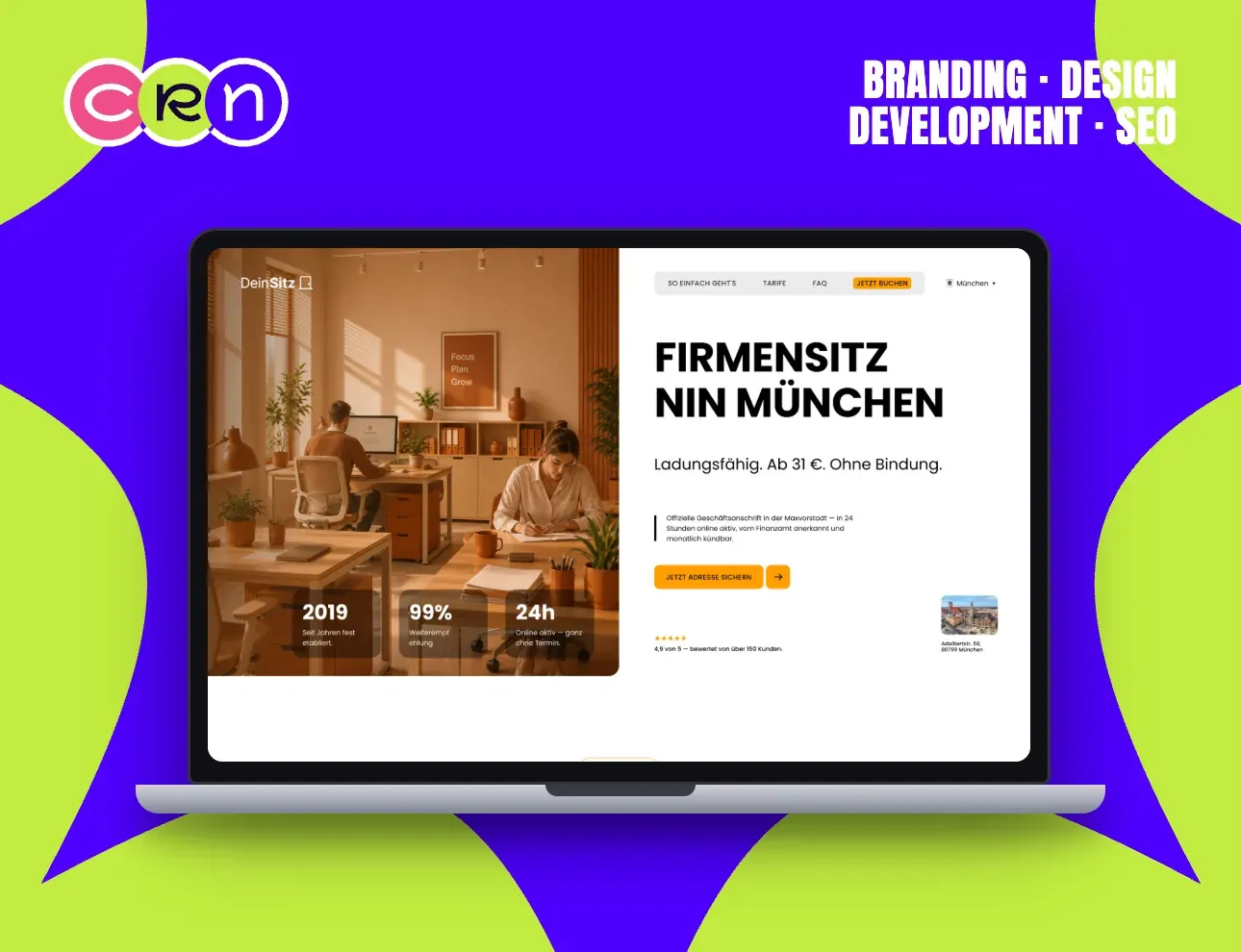
Dein Sitz sells a registered business address in Munich. The site is written and set in German (written, not translated) with the city switcher in the nav and the price, the legal standing and the cancellation terms in the hero.
That last part is the SEO decision hiding inside a design decision. Someone searching for a Munich business address wants to know whether it is ladungsfähig and what it costs. Putting the answer in the hero is both what the visitor wants and what the query is asking.
If your market is local, the language and the address are ranking content. They are not decoration and they do not belong in the footer.
Questions we get asked
Is Webflow good for SEO?
Yes, and no better or worse than any other well-built platform. It gives you clean markup, per-page titles and descriptions, editable slugs, canonicals, a sitemap and server-side rendering out of the box. Everything past that is content, structure and links, exactly as it would be anywhere else.
Does the .webflow.io staging URL hurt my SEO?
It can, and this is the most common technical mistake on Webflow sites. If the staging address stays crawlable after launch, two copies of the same content compete with each other. Turn on the noindex toggle for the subdomain, and set the canonical to the real domain. Ten minutes to fix, months to notice.
Do I need an SEO plugin or app for Webflow?
No. The panel covers the fields that matter and the rest is not a settings problem. Most Webflow SEO trouble is a page that does not answer anything, and no app has ever fixed that one.